Friction maxxing: the 2026 spending trend your impulse-buying brain actually needed all along
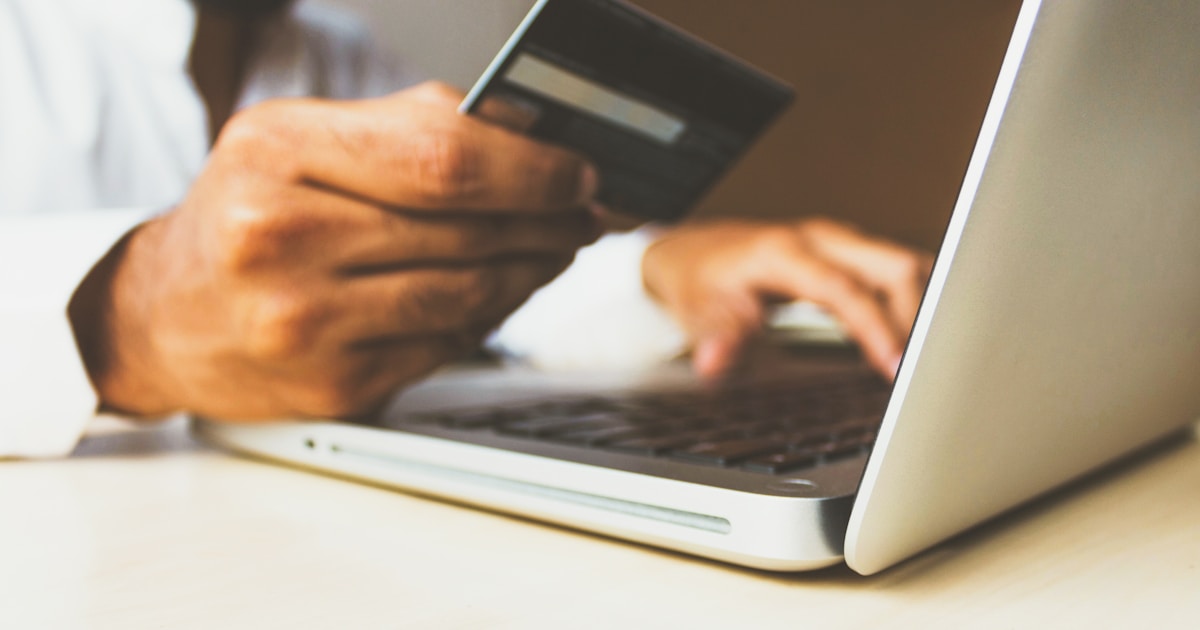
You've probably noticed that buying things online has gotten almost embarrassingly easy. One tap. Face ID. Done. You didn't even have to get off the couch.
You've probably noticed that buying things online has gotten almost embarrassingly easy. One tap. Face ID. Done. You didn't even have to get off the couch.
That's not an accident. And in 2026, a growing number of people are deciding to fight back, not with more willpower, but with strategic inconvenience.
It's called friction maxxing. And if your impulse spending has ever felt like it was running on autopilot, this might be the first spending strategy that actually makes sense to your brain.
What is friction maxxing?
Friction maxxing is the practice of deliberately adding steps, delays, and obstacles between yourself and a purchase. Not to make shopping impossible, but to interrupt the automatic loop that takes you from "I want this" to "it's already in my cart."
The word "friction" here is borrowed from behavioral economics, where it refers to any cost, effort, or delay that changes behavior. In payments research, friction has traditionally been seen as the enemy, something to be eliminated so transactions can happen faster. Friction maxxers are betting that for impulse spending, friction is actually the point.
Think of it like this: your brain has a Feeling-to-Cart Loop. Something triggers a want (stress, boredom, a well-timed ad), and the path from that feeling to a completed purchase has been engineered to have as few steps as possible. Friction maxxing is about putting steps back in.
Why your brain was never built for this
The modern payment experience is designed around something called the law of least effort, a principle from behavioral psychology suggesting that when two paths lead to the same outcome, humans will almost always take the one that requires less energy.
This isn't a character flaw. It's how brains conserve resources. The problem is that the payment industry has exploited this tendency with extraordinary precision.
Research from the payment technology sector shows that frictionless payment systems, including one-click purchasing and saved card details, significantly increase spending. One major report found that 73% of consumers abandon purchases when checkout requires more than two steps. From a conversion standpoint, that's a problem to solve. From a personal finance standpoint, that abandoned cart might have been a good thing.
There's also something researchers call the "pain of paying," the mild psychological discomfort that comes with spending money. It's more pronounced when you hand over cash, somewhat present when you swipe a card, and nearly absent when you tap, click, or use a wearable. The more invisible the payment feels, the less your brain registers that you spent anything at all.
How digital design removed your spending defenses
The past decade has systematically dismantled every natural pause that used to exist in the purchase process.
Remember having to find your wallet? That was friction. Remember typing in your card number? Friction. Remember waiting for a slow checkout page to load? Annoying, but still friction.
Now: saved payment methods. One-click purchasing. Biometric authentication that approves transactions in milliseconds. Retailers that remember your address, your size, your last order. Subscription boxes that send things before you've even decided you want them.
Buy now, pay later (BNPL) services like Klarna and Afterpay are a particular case study in friction removal. By breaking a $120 purchase into four $30 payments, they don't just defer the cost, they fundamentally change how your brain evaluates it. The "pain of paying" is reduced not just by spreading payments but by making the first payment feel small and manageable. People using BNPL consistently report being surprised by how much they've spent when they add it all up across multiple services.
Each individual feature made sense as a customer convenience. Together, they created an environment where the impulse to buy and the act of buying collapsed into a single moment.
What that's costing you
A 2023 analysis found that consumers using tap-to-pay and stored payment methods spent meaningfully more per month than those using traditional payment methods, even when income and lifestyle factors were controlled for. The difference wasn't dramatic on any single purchase. It was cumulative.
This is where impulse spending does its real damage. It's rarely one big reckless purchase. It's dozens of small, easy, almost-unconscious ones. The $14 app. The $28 face cream. The $45 thing you saw in an Instagram ad and genuinely can't remember ordering.
Your brain doesn't log these as spending decisions because they barely registered as decisions at all.
How to friction-maxx (without losing your mind)
The goal isn't to make shopping miserable. It's to create enough space between the impulse and the action that your actual preferences can participate.
A quick note before we get into tactics: friction works best on discretionary spending. For essentials like groceries, bills, and medications, adding friction can create unnecessary stress and missed payments. Target the categories where spending tends to happen on autopilot without much satisfaction. Not your whole financial life.
Here are five approaches, scaled from low-effort to committed:
1. Delete saved payment information
This is the lowest-lift, highest-return change most people can make. When you have to physically find your card and type in the number, your brain has time to catch up with your fingers. A meaningful percentage of people who reach that moment decide not to complete the purchase.
2. Disable biometric payment approval
Face ID and fingerprint payments feel effortless because they are. Switching to a PIN or password for payment authorization adds a few seconds and a tiny bit of cognitive engagement. That's often enough.
3. Use cash for specific categories
Cash works because it's tangible. When you hand over physical money, the pain of paying actually registers. You don't need to go fully cash-only. Pick one category where you tend to overspend, eating out, clothing, home stuff, and use cash only for that.
4. Apply the 24-hour rule to non-essential purchases
Add items to your cart. Don't buy them. Come back tomorrow. An enormous number of impulse purchases evaporate overnight, not because you decided against them, but because the feeling that drove them passed.
5. Separate (or freeze) your impulse-category card
Move the card you tend to use for discretionary spending to a separate account and log out of any app that has it saved. For some people, an even more literal version works: keep that card frozen in a block of ice at home. If you want to use it, you have to wait for it to thaw. It sounds extreme, and it is, but for spending patterns tied to specific cards, the physical barrier works when mental barriers don't.
Why this works better than willpower
Willpower is a limited resource. Most approaches to impulse spending ask you to summon it at exactly the moment it's least available: when you're tired, stressed, or emotionally activated, which is also when you're most likely to impulse buy.
Friction maxxing doesn't rely on in-the-moment self-control. It relies on a calmer version of you, past you, who set up the friction, making it slightly harder for activated-you to act instantly.
Behavioral economists call this a commitment device. You're not fighting your own brain in real time. You're engineering the environment so the behavior you want is easier than the one you don't.
Research on behavior change consistently shows that environmental design outperforms intention-setting. People who reorganize their environment to make desired behaviors easier (and less desired behaviors harder) tend to change more durably than people who rely on motivation and willpower alone.
Questions people actually ask about friction maxxing
Won't this just make shopping annoying?
A little, and that's the point. But "annoying" is relative. Typing in your card number takes about 20 seconds. If a purchase is worth making, 20 seconds won't stop you. If it wasn't worth making, those 20 seconds might.
What if I still impulse buy even with friction?
Friction reduces impulse buying, it doesn't eliminate it. If you're finding that even significant delays aren't helping, it might be worth looking at what's driving the impulse in the first place. At Impause, we've written about the emotional patterns underneath spending, including how stress spending works and what boredom buying is really about. The friction is the first layer. Understanding the feeling underneath is the second.
Is there a version of this for subscriptions?
Yes. Move subscriptions you don't actively choose each month to a separate card, then cancel or freeze that card. You'll surface which ones you actually want versus which ones you're letting continue because canceling feels like effort.
Does BNPL count as a form of reduced friction?
Absolutely. BNPL services are specifically designed to lower the psychological barrier to purchasing by making the immediate cost feel smaller. If you use them regularly, consider treating them as a friction-adding opportunity instead: before approving a BNPL purchase, mentally add up the total and ask if you'd spend that full amount today in one payment.
The thing worth knowing
You're not bad at money because you impulse buy. You're a normal human being in an environment that was specifically optimized to extract purchases from you before you had time to think.
Friction maxxing is just taking a little of that control back. You're not eliminating spending, you're restoring the pause. The moment between wanting and buying where you actually get to decide.
That pause is where your preferences live.
Impause helps you understand the emotional patterns behind your spending, so you can build the self-awareness that makes friction maxxing, and everything else, actually stick.