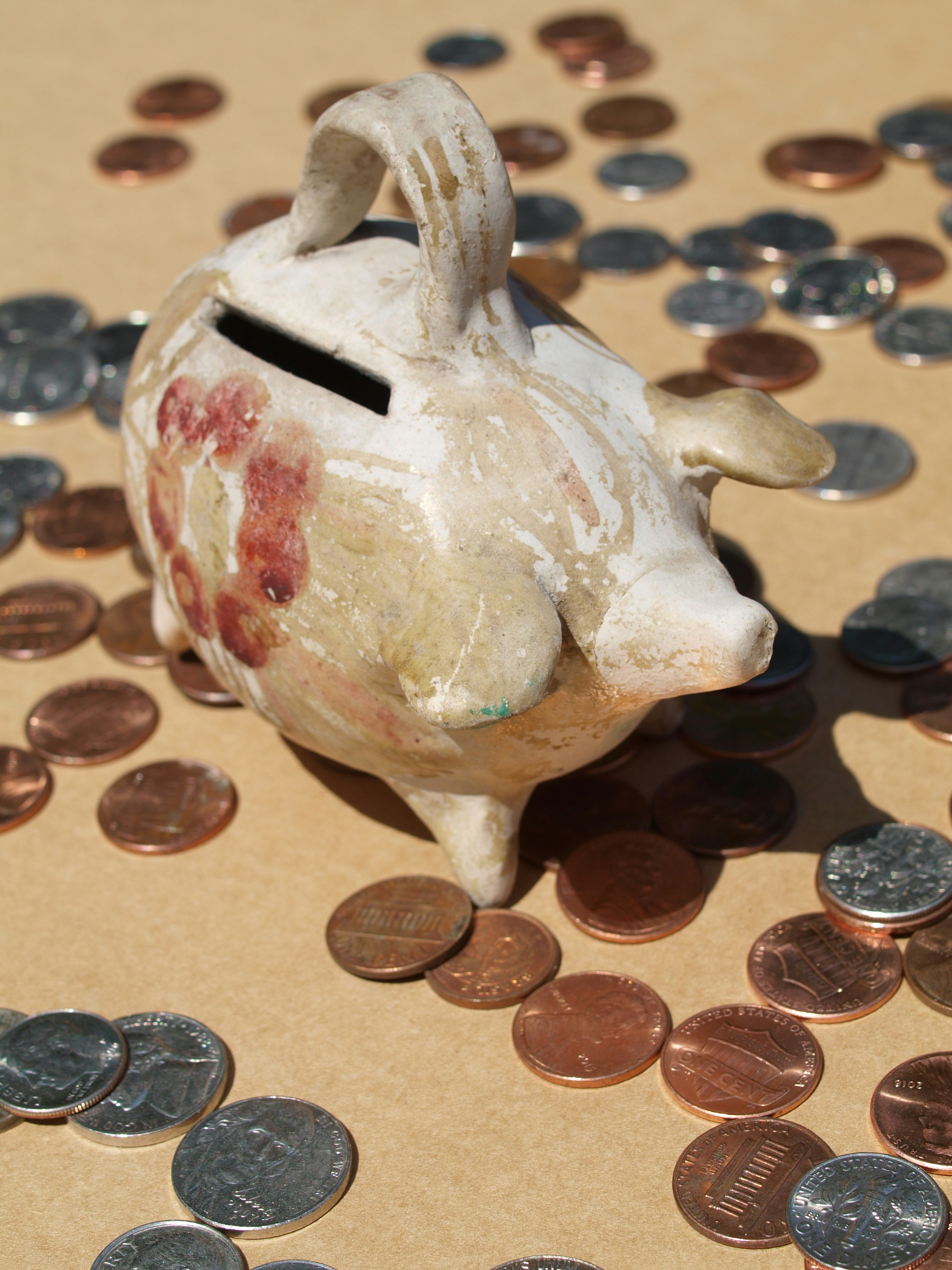
Recycling for cash: 6 things in your house you can turn into money (and why your brain resists)
The average American adult is sitting on 2.4 unused phones and, by one industry estimate, thousands of dollars in forgotten electronics alone. You…
The average American adult is sitting on 2.4 unused phones and, by one industry estimate, thousands of dollars in forgotten electronics alone. You probably know the feeling: there's a bag of cans in the garage you keep meaning to deal with, a drawer of old phones you're saving for reasons you can't name, and a closet shelf of clothes with tags still on. None of it is laziness. Your brain treats things you own as more valuable than they are and treats the effort of converting them to cash as bigger than it is, which is a well-documented quirk of ownership, not a character flaw. This article walks through six categories of household stuff you can actually recycle or sell for cash, what each one realistically pays, and the psychology of why the pile got there in the first place.
Table of contents
- Why your house is full of money you can't see
- 1. Bottle and can deposits: the refund you already paid
- 2. Aluminum cans by the pound: the scrap yard route
- 3. The scrap metal hiding in your garage
- 4. Old phones and tablets: the drawer of depreciating money
- 5. Clothes you never wear: the closet dividend
- 6. Car batteries: the core charge refund
- What ties these together
- Frequently asked questions
- Ready to see the pattern behind the pile?
Key takeaways
| Point | Details |
|---|---|
| Your clutter has a cash value | Between deposits, scrap, trade-ins, and resale, most households are storing hundreds of dollars in convertible stuff. |
| The endowment effect is why it's still there | Your brain values things you own at roughly double what buyers will pay, which makes selling feel like losing. |
| Deposits and trade-ins are the easy wins | Bottle deposits and phone trade-ins pay quickly with almost no negotiation or effort. |
| Clutter itself has a cost | Research links cluttered homes to higher stress and lower wellbeing, so the payout isn't only financial. |
| The pile is data | What you're storing is a record of past purchases, and noticing the pattern matters more than the cash. |
Why your house is full of money you can't see
Before the list, it's worth understanding why the recyclables and resellables pile up at all, because the answer isn't disorganization.
In a classic Cornell experiment, researchers handed half a class coffee mugs and then asked everyone to trade. Students who owned a mug wouldn't part with it for less than about $5.25 on average, while students without one would only pay around $2.75 for the exact same mug. That gap is the endowment effect: the moment something becomes yours, your brain inflates its value, mostly because giving things up registers as a loss, and losses hurt roughly twice as much as gains feel good. So the box of stuff in your garage isn't sitting there because you're careless. It's sitting there because every item in it feels more valuable to you than any buyer will ever agree to pay, and the gap between those two numbers feels like a loss you'd rather not take.
There's a second force at work, one we'd call the Someday Shelf: the mental category for things kept because a future version of you might need them. The Someday Shelf feels responsible, but it quietly costs you twice. You forgo the cash the item is worth today, and you pay in ambient stress, because research on home environments has linked cluttered living spaces to elevated cortisol and a 2025 study in the Journal of Environmental Psychology found that people who saw their homes as cluttered reported lower wellbeing and more negative feelings. If a lot of what's on your shelf came from purchases you didn't quite plan, that's a pattern worth noticing too, and we've written about why you keep buying things you don't need if that part hits home.
"The pile in your garage isn't a mess. It's a stack of small losses your brain doesn't want to realize."
What follows is ordered from easiest money to most surprising, so you can start wherever the friction feels lowest.
1. Bottle and can deposits: the refund you already paid
The simplest form of recycling for cash isn't really earning at all. It's collecting a refund on money you already spent.
Ten US states run container deposit programs, often called bottle bills: California, Connecticut, Hawaii, Iowa, Maine, Massachusetts, Michigan, New York, Oregon, and Vermont. In these states, 5 to 10 cents is added to the price of each eligible bottle or can, and you get it back when you return the empty container to a store or redemption center. Michigan and Oregon pay 10 cents per container, and Connecticut moved to 10 cents in 2024. A garbage bag of empties in a 10-cent state is real money, often $15 to $25 per bag, for the effort of a single errand.
The psychology here is worth naming because it explains why so many deposits go unclaimed. The nickel was invisible when you paid it, folded into the checkout total where your brain never itemized it. Getting it back requires a deliberate trip, and your brain discounts small future rewards steeply. The fix is to stop treating returns as a chore you'll do someday and attach them to a trip you already make, like the weekly grocery run.
Pro Tip: Give the refund a destination before you collect it. Deposits that land in your regular account evaporate into everything else. Deposits that go into a named jar or a specific savings goal stay visible, and visibility is most of what makes small money feel like money.
2. Aluminum cans by the pound: the scrap yard route
If you're not in a deposit state, your cans still have value, just through a different door.
Scrap yards buy aluminum cans by weight, and prices in mid-2026 average around 54 cents per pound, with some yards paying 70 cents or more depending on region and volume. It takes roughly 32 empty cans to make a pound, so each can is worth about 2 cents. That number is where most people check out, and that's exactly the mistake worth examining. Two cents per can sounds like nothing because your brain is judging the single unit instead of the flow. A household that goes through a six-pack a day generates over 2,100 cans a year, which is roughly 66 pounds, or $35 to $45 of aluminum, on top of whatever else ends up in the bag. Your brain is bad at this kind of math by default, which is the same reason subscription charges feel small and annual totals feel shocking. We've written about why your brain needs a denominator, and cans are a perfect case: per can, it's pocket lint, but per year, it's a tank of gas.
The practical version: crush the cans, store them in one dedicated bin, and take one trip when the bin is full. Batching turns a nagging daily chore into a twice-a-year errand with a payout at the end.
3. The scrap metal hiding in your garage
Cans are the entry point, but the better money in scrap is usually in the metal you forgot you owned.
Old copper pipe from a renovation, brass fittings, aluminum window frames, the broken grill, a dead microwave, holiday light strings, extension cords with the plugs chewed off. Scrap yards buy all of it, priced by metal type and weight, and copper in particular pays several times more per pound than aluminum. The pattern that keeps this stuff in your garage is one we'd call the Just-in-Case Tax: hardware and materials feel uniquely irresponsible to discard because a hypothetical future repair might need them. The problem is that the hypothetical repair rarely arrives, and when it does, you usually buy new parts anyway because you can't find the old ones.
A reasonable rule: if a piece of metal has survived two years in your garage without being touched, it has already failed its audition for the future. One weekend sweep, one trunk load, one yard visit. Call ahead or check a price app first so the payout isn't a mystery, because uncertainty is its own form of friction, and friction is what built the pile.
"The Just-in-Case Tax is paid in garage space, low-grade guilt, and money that never becomes money."
4. Old phones and tablets: the drawer of depreciating money
Here's where the numbers stop being cute. Electronics are the most valuable thing most people are storing, and the fastest-depreciating.
A survey of US consumers found that 80% have never traded in a phone, and ecoATM's research puts the average at 2.4 unused phones per adult, which adds up to an estimated 150 million idle devices nationwide. Unlike cans, phones lose value every month you wait, because trade-in prices track the resale market and the resale market only moves down. The drawer feels like storage, but functionally it's a savings account with a negative interest rate.
Why do we keep them? Partly the endowment effect again, partly a vague plan to "wipe it first" that never gets scheduled, and partly the sense that the phone was expensive, so letting it go for $80 feels like admitting the loss. But the loss already happened at the moment of upgrade. Holding the phone doesn't undo it, it just adds opportunity cost, the value of what that money could be doing instead. Carrier trade-ins, manufacturer programs, kiosks like ecoATM, and buyback sites all make this a 15-minute task. Back up, factory reset, get quotes from two places, take the better one.
Pro Tip: Put a calendar reminder for the weekend after any phone upgrade titled "trade in the old one." The window when trade-in value is highest is exactly the window when the old phone feels least interesting, and a reminder converts that dead zone into the best possible selling moment.
5. Clothes you never wear: the closet dividend
From the garage and the drawer to the closet, where the resale market has quietly become enormous.
Secondhand fashion hit $55.5 billion in US sales in 2025, now accounts for 12% of what Americans spend on clothing, and is growing four times faster than the primary fashion market. Platforms like Poshmark, Depop, eBay, and ThredUp mean the buyer for your unworn jacket genuinely exists, which wasn't true fifteen years ago. The rise of the underconsumption trend has also made secondhand normal rather than a compromise, so the demand side keeps growing.
The psychology of the unworn section of a closet deserves gentleness, because it's rarely about clothes. Tags-still-on purchases are often a snapshot of a feeling: the person you were planning to become, the event you were bracing for, the mood you were trying to fix in a checkout flow. Selling those pieces can feel like abandoning that imagined self, which is why the jacket survives every cleanout. It helps to separate the two things: the feeling was real, and the jacket was never going to deliver it. Listing it is not a verdict on you, it's just inventory management.
Start with a one-bag rule: a single bag, filled only with things you haven't worn in a year, listed or sent to a resale service in one sitting. Momentum does the rest.
6. Car batteries: the core charge refund
The most surprising entry on the list is sitting in the corner of the garage being actively ignored: the old car battery.
Most auto parts retailers charge a core charge when you buy a new battery, a refundable deposit you get back when you hand in the old one. If you bought a replacement and never returned the dead battery, that refund is still sitting there unclaimed. Even without a receipt, many retailers and scrap yards pay cash for old lead-acid batteries because the lead inside is valuable and nearly all of it gets recycled. Batteries are also one of the few items on this list you genuinely shouldn't throw away, since they're hazardous waste in most states, so the cash is essentially a reward for doing the thing you're supposed to do anyway.
This is the purest example of the whole article's theme: it's literally your money, already paid, waiting at a counter you drive past regularly. The only thing between you and it is the errand.
What ties these together
Six categories, one pattern. In every case, the money already exists. It's in deposits you prepaid, metal you own, devices you replaced, clothes you outgrew, and refunds you never collected. And in every case, the thing standing between you and the cash isn't information or effort. It's a set of predictable mental quirks: the endowment effect inflating what your stuff is worth, small-unit math making real totals look like pocket change, and the Someday Shelf dressing up avoidance as prudence.
| Item | Typical payout | Effort | Best first move |
|---|---|---|---|
| Bottle deposits | 5 to 10 cents per container | Low | Attach returns to your grocery run |
| Aluminum cans | About 54 cents per pound | Low | One dedicated bin, cash out when full |
| Scrap metal | Varies by metal, copper pays best | Medium | One weekend garage sweep |
| Phone trade-in | Often $50 to a few hundred | Low | Get two quotes, take the better one |
| Clothing resale | Varies widely | Medium | The one-bag rule |
| Car batteries | Core refund or scrap cash | Low | One errand you already drive past |
There's a deeper layer here, and it's the reason a spending psychology app is writing about scrap metal. The pile is a record. Every unworn jacket and unused gadget is a receipt from a moment when a purchase was solving something a purchase couldn't solve. Turning the pile into cash is satisfying, but reading the pile is where the durable change is, because the alternative is refilling the garage on schedule. If the inflow side is the part that stings, our guide on how to stop buying things you don't need picks up exactly where this article leaves off.
Frequently asked questions
What household items can you recycle for cash?
The most reliable categories are deposit bottles and cans (in the 10 bottle-bill states), aluminum cans and scrap metal at scrap yards, old phones and tablets through trade-in programs, clothing through resale platforms, and lead-acid car batteries through core refunds or scrap buyers. Together they cover most of what a typical household is storing.
Is recycling cans for money worth it?
Per can, no. Per year, often yes. At roughly 2 cents per can at scrap prices, or 5 to 10 cents in deposit states, a regular soda or seltzer habit produces $35 to $100+ a year in cans alone. The trick is batching: one bin, a few trips a year, rather than treating every can as a decision.
What states pay you for bottles and cans?
California, Connecticut, Hawaii, Iowa, Maine, Massachusetts, Michigan, New York, Oregon, and Vermont all run container deposit programs. Deposits range from 5 to 10 cents per container depending on the state and container size, with Michigan and Oregon at a flat 10 cents.
Where can I sell my old phone for cash?
Carrier and manufacturer trade-in programs, buyback sites like Gazelle, and ecoATM kiosks in grocery stores all pay for used phones. Prices drop steadily over time, so the best moment to sell is right after you upgrade. Back up your data and do a factory reset first.
Ready to see the pattern behind the pile?
Cashing in the clutter feels good, and you should absolutely take the money. But if the same categories keep refilling, that's your spending patterns talking, and patterns respond to awareness better than they respond to another garage cleanout. The spending personality quiz takes two minutes and shows you which emotional triggers drive your buying, which is the inflow side of everything this article covered. No shame, just data, and maybe a slightly emptier garage.