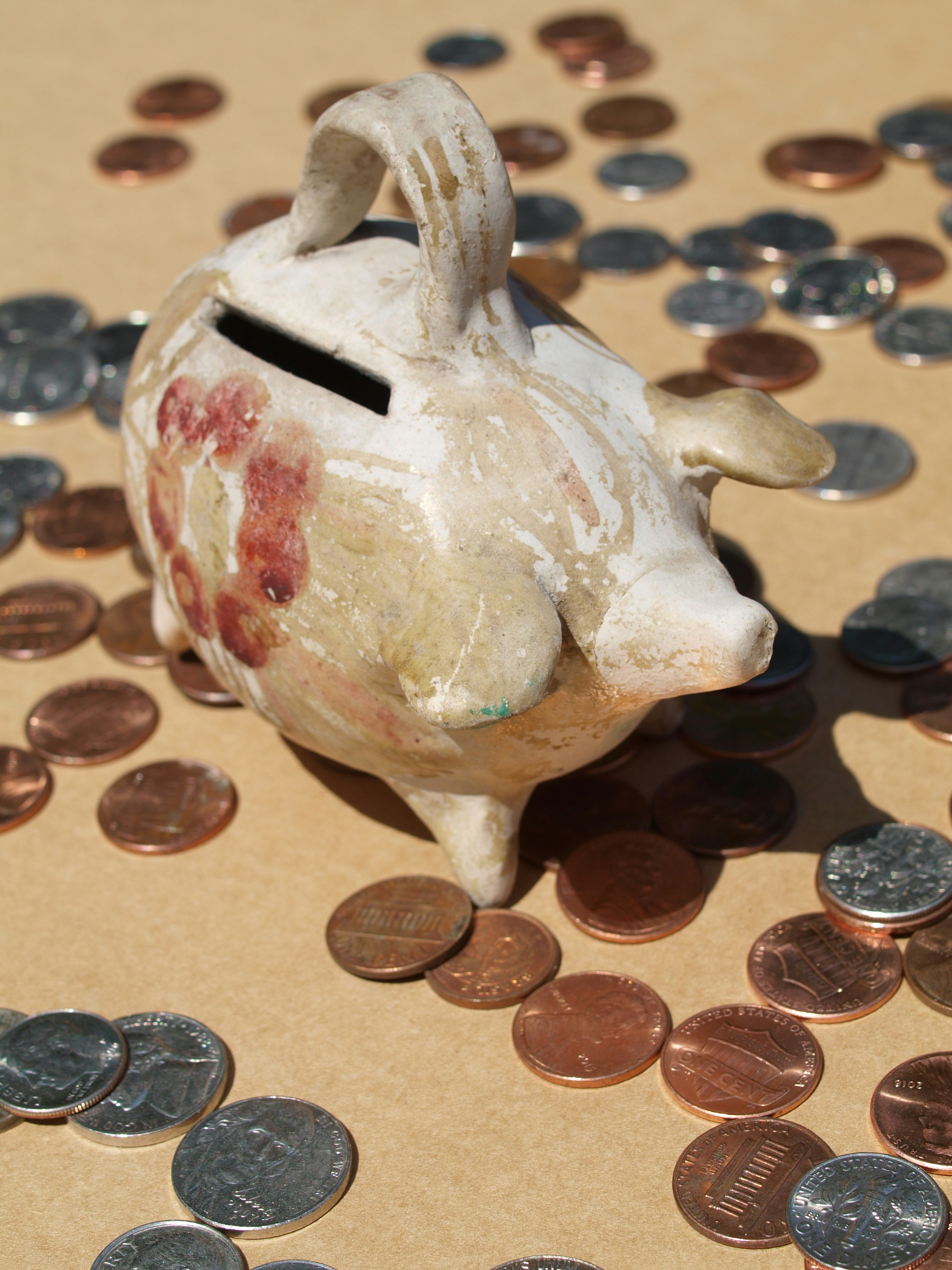
Types of financial biases: 6 patterns quietly running your spending decisions
About 65% of everyday behaviors run on autopilot, triggered by habit rather than a conscious decision, according to 2026 research from the University of…
About 65% of everyday behaviors run on autopilot, triggered by habit rather than a conscious decision, according to 2026 research from the University of Surrey and University of South Carolina. That number gets a lot more interesting once you point it at your bank account. You've had the experience: a "sale" price makes something feel like a steal even though you never wanted it an hour ago, or you keep paying for a subscription you don't use because canceling would mean admitting the money's already gone. None of that means you're careless with money. It means your brain is running the same mental shortcuts it uses for everything else, and those shortcuts weren't built with checkout pages and buy-now-pay-later buttons in mind. This post names six of the most common financial biases, shows you exactly where they show up in daily spending, and gives you one real thing to do about each.
Table of contents
- Why financial biases matter (and why they're not a personality flaw)
- 1. Anchoring bias: the first number wins
- 2. Loss aversion: losing feels twice as bad as winning feels good
- 3. Present bias: future you is basically a stranger
- 4. Mental accounting: not all dollars are equal in your head
- 5. Sunk cost fallacy: throwing good money after bad
- 6. Herd bias: if everyone's doing it, it must be fine
- What ties these together
- Ready to spot your own patterns?
- Frequently asked questions
Key takeaways
| Point | Details |
|---|---|
| Biases are shortcuts, not flaws | Your brain uses the same handful of mental shortcuts for money that it uses for every other decision, which is why they're so easy to miss. |
| The first number you see anchors everything after it | A crossed-out "original price" changes what feels reasonable, even when you know it's a marketing tactic. |
| Money doesn't feel the same in every account | A tax refund, a bonus, and a paycheck get spent by completely different rules, even though it's all the same dollar. |
| Past spending shouldn't drive future spending, but it does | The sunk cost fallacy convinces you that quitting now would "waste" money you've actually already spent either way. |
| Naming the pattern is the intervention | You can't out-discipline a bias you don't know is running. Recognition is most of the work. |
Why financial biases matter (and why they're not a personality flaw)
Financial biases are the mental shortcuts your brain uses to make fast decisions about money, and they're not unique to people who are "bad with numbers." Every brain uses them, because full, rational cost-benefit analysis for every purchase would be exhausting and slow. Behavioral finance research has spent decades documenting how consistently these shortcuts steer decisions, from big investment calls down to whether you grab the extended warranty at checkout.
Here's the reframe worth sitting with: if a bias were really about character, it would show up randomly. It doesn't. It shows up in the exact same predictable pattern, in the exact same situations, for almost everyone. That's not a character problem. That's a system running exactly as designed, just not a system designed with your bank balance in mind. Once you can name the pattern, you stop arguing with yourself about willpower and start noticing your spending triggers instead, which is a much more useful place to put your attention.
"A bias isn't a flaw in your thinking. It's your thinking working exactly the way it evolved to, applied to a situation it was never built for."
1. Anchoring bias: the first number wins
Anchoring bias is the tendency to lean heavily on the first piece of information you see, even when you know it's arbitrary, and let it shape every judgment that comes after it. The classic demonstration comes from Amos Tversky and Daniel Kahneman's 1974 experiment: they spun a wheel that landed on either 10 or 65, then asked people to guess what percentage of United Nations countries were African. People who saw the number 10 guessed around 25%, while people who saw 65 guessed around 45%, a huge swing caused by a number that had nothing to do with the actual question. A related study by Dan Ariely found that MBA students primed with the last two digits of their own Social Security numbers bid substantially more on items when their number was high, and denied it had any effect on them even after seeing the data.
Retailers use this constantly. A $900 "list price" crossed out next to a $750 "sale price" makes $750 feel like a win, even if $750 is still more than the item is worth to you. Your brain isn't doing math on the actual product. It's doing math on the gap between two numbers, and the first number sets the whole frame.
You'll notice this most around big "was/now" pricing, limited-time percentage-off banners, and the "recommended" middle option on a subscription pricing page (which exists specifically to anchor you toward it). One way to catch it: before you look at the sale price, ask yourself what you'd pay for this item with no discount attached at all. If the number you land on is way lower than the "deal," the deal was never really about the product.
Pro tip: cover the crossed-out price with your thumb before you decide whether something's worth it. If it still feels like a good buy without the anchor, it probably is.
2. Loss aversion: losing feels twice as bad as winning feels good
Loss aversion describes the finding, first documented by Kahneman and Tversky and since replicated across dozens of countries, that losses feel roughly twice as painful as equivalent gains feel good. Losing $50 hurts more than finding $50 feels great, even though the dollar amount is identical. Your brain is not weighing the numbers symmetrically. It's weighing the emotional stakes, and it consistently overweights the downside.
This is why "limited time," "only 2 left," and countdown timers work so well. They're not selling you the product anymore. They're selling you the fear of losing access to it, and that fear is a much stronger motivator than the appeal of the product itself ever was. It's also why it's so hard to cancel a subscription you're not using: the framing in your head isn't "I'll save $12 a month," it's "I'll lose access to something," and loss framing wins almost every time.
You didn't keep paying for that app you forgot about because you're careless with money. You kept paying because canceling registered, somewhere in your nervous system, as a loss, and your brain is built to avoid losses even more urgently than it seeks gains. That's not a discipline problem. That's how the reward system is wired for everyone, and once you can see the loss-framing for what it is, it loses a lot of its grip. Auditing your subscriptions before they quietly compound is a good place to put that awareness to work.
3. Present bias: future you is basically a stranger
Present bias, also called temporal discounting, is your brain's tendency to make a reward available right now feel enormous and a cost due later feel small and abstract, even when the math says otherwise. We've written a full explainer on present bias if you want the deeper mechanics, but the short version is this: your brain treats "future you" almost like a different person, someone else's problem to deal with later.
This is the entire engine behind buy-now-pay-later checkout options. Splitting $200 into four payments of $50 doesn't change the total cost. It changes which brain system processes the decision: $200 today triggers a real evaluation, while $50 due today (and three more $50s scheduled for a future that doesn't feel real yet) barely registers as spending at all.
You'll feel this most sharply with subscriptions billed annually versus monthly, "buy now, pay later" splits, and any purchase where the bill arrives weeks after the decision. A useful trick: before checkout, add up the full total cost, not the per-installment number, and say the full number out loud. Making the future cost concrete right now is often enough to shift the decision.
4. Mental accounting: not all dollars are equal in your head
Mental accounting is the tendency to treat money differently depending on where it came from or what mental "bucket" you've assigned it to, even though a dollar is a dollar no matter its source. Federal Reserve Bank of St. Louis research on mental accounting traces this back to economist Richard Thaler's original work, which found people spend "windfall" money like tax refunds, bonuses, and gift cards far more loosely than money earned through a regular paycheck.
Here's the pattern in practice: a $600 tax refund gets spent on something fun within days, while $600 sitting in a checking account from paychecks gets treated with far more caution. It's the same $600. Your brain just filed it under a different label, and that label came with different rules attached.
This shows up in smaller ways too: treating a gift card as "free money" that doesn't count, spending a discount amount on something unrelated because it "feels like savings," or feeling fine about a $40 impulse buy because you're "using points" rather than cash. The denominator effect is a close cousin of this: a $40 charge feels tiny against a $2,000 paycheck and enormous against a $200 savings goal, even though it's the exact same $40. Naming the account you've mentally put the money in is often enough to make the spending decision feel real again.
| Bias | What it feels like | What's actually happening | One way to catch it |
|---|---|---|---|
| Anchoring | "This is such a good deal" | The first number you saw is shaping what feels reasonable | Ask what you'd pay with no discount shown at all |
| Loss aversion | "I don't want to miss this" | Losing feels about twice as bad as an equivalent gain feels good | Ask what you're actually afraid of losing, and whether it's real |
| Present bias | "Future me can handle it" | A cost that's due later barely registers as a cost right now | Say the full total cost out loud before you check out |
| Mental accounting | "It's basically free money" | The dollar's source, not its value, is deciding how carefully you spend it | Rename the money by what it's for, not where it came from |
5. Sunk cost fallacy: throwing good money after bad
The sunk cost fallacy is the pull to keep spending on something specifically because you've already spent money on it, even when the money you already spent is gone either way and can't be recovered by spending more. Research on the sunk cost effect has found this pattern shows up in decisions as small as finishing a bad meal because you paid for it and as large as staying in a failing investment because pulling out would mean "admitting" the loss.
The gym membership is the textbook example. You paid for the year up front, you've used it four times, and canceling now feels like it would "waste" the money. Except the money's already spent regardless of what you decide next. The only question that actually matters going forward is whether the membership is worth paying for from this point on, and your past spending has no vote in that decision no matter how much it feels like it should.
This same pattern drives people to keep a car in the shop past the point of diminishing returns, finish a course they've stopped getting value from, or hold onto a subscription because they "already paid for the year." A simple reset: ask yourself whether you'd sign up for this today, at today's price, knowing what you know now. If the answer is no, the money you already spent isn't a reason to keep going. It's just information about a decision that's already finished.
Pro tip: when you notice yourself thinking "I've already put so much into this," treat that sentence as a flag, not a reason. It usually means the sunk cost fallacy has entered the conversation.
6. Herd bias: if everyone's doing it, it must be fine
Herd bias, sometimes called social proof, is the tendency to treat a purchase as safer or smarter simply because a lot of other people are making it, using the size of the crowd as a stand-in for actually evaluating the decision yourself. Research on herd behavior in financial markets has documented this at scale: investors pile into trending assets not because they've independently concluded it's a good idea, but because everyone else piling in feels like evidence on its own.
You don't need a stock portfolio to feel this one. It's the exact same mechanism behind a product going viral on social media and selling out within hours. Watching a comment section full of "just bought mine" isn't giving you new information about whether you need the product. It's giving you a crowd, and your brain reads crowd size as a proxy for correctness. That's how a viral TikTok product ends up in your cart at midnight with a level of urgency that has nothing to do with the product's actual usefulness to you.
The tell is usually the timeline: if you found out about something five minutes ago and already feel like you need it today, the urgency is almost certainly coming from the crowd, not from an honest need. A day of distance from the group usually restores your own judgment.
What ties these together
None of these six patterns are proof that something is wrong with how you handle money. They're proof that your brain is doing what brains do: reaching for a shortcut instead of running a full calculation every single time, because full calculations are slow and shortcuts are fast. The shortcuts exist because they work most of the time, in most contexts. They just weren't built for a world of countdown timers, one-click checkout, and buy-now-pay-later splits designed by people whose job is to trigger exactly these patterns.
The Impause philosophy on this is simple: awareness beats restriction. You don't need a rulebook that tells you no. You need to recognize the pattern in the moment it's happening, which is usually enough to create a small pause between the trigger and the purchase. That pause is where the actual decision gets to happen, instead of the shortcut making it for you.
Ready to spot your own patterns?
If you read through this list and recognized yourself in two or three of them, that's normal. Most people do. The next step isn't memorizing six definitions. It's noticing which of these shows up most in your own spending, because that's the one worth paying attention to first.
Take the spending personality quiz to get a clearer read on your own patterns and triggers, and explore how psychology, not willpower, actually explains most spending decisions. If you're ready to put the pause into practice, Impause is built specifically to catch these moments before the purchase happens, not after.
Frequently asked questions
What are the most common financial biases?
Anchoring, loss aversion, present bias, mental accounting, the sunk cost fallacy, and herd bias are among the most common, and they show up constantly in everyday spending, not just in investing decisions.
Are financial biases the same as being bad with money?
No. Financial biases are mental shortcuts that every brain uses regardless of income, financial knowledge, or spending history. They're a normal feature of how brains process decisions quickly, not a sign of a character flaw.
How do I stop a financial bias from affecting my spending?
You can't fully turn a bias off, but naming it in the moment weakens its grip. Recognizing "this is loss aversion" or "this is a sunk cost" creates a short pause between the trigger and the purchase, which is usually enough space to make a different choice.
Why do financial biases feel so hard to notice in the moment?
Biases are designed to feel like normal, obvious reasoning rather than a shortcut. That's what makes them effective. The goal isn't to catch every single one, it's to get familiar enough with the patterns that you start to recognize a few of the most common ones as they happen.