

"Treat Yourself" Culture Is a Trap (And You Fell for It)
You've had a hard week. You deserve something nice. That $60 candle isn't frivolous—it's self-care. That impulse takeout order? You're just treating…
You've had a hard week. You deserve something nice. That $60 candle isn't frivolous—it's self-care. That impulse takeout order? You're just treating yourself. That spontaneous online haul at midnight? You earned it.
Except... did you?
Somewhere along the way, "treat yourself" stopped being an occasional indulgence and became a daily justification for spending money you don't have on things you don't need. And the worst part? You've been sold this as empowerment.
How "Self-Care" Became a Marketing Strategy
Let's be clear: actual self-care is real. Rest is necessary. Joy matters. Taking care of yourself isn't optional.
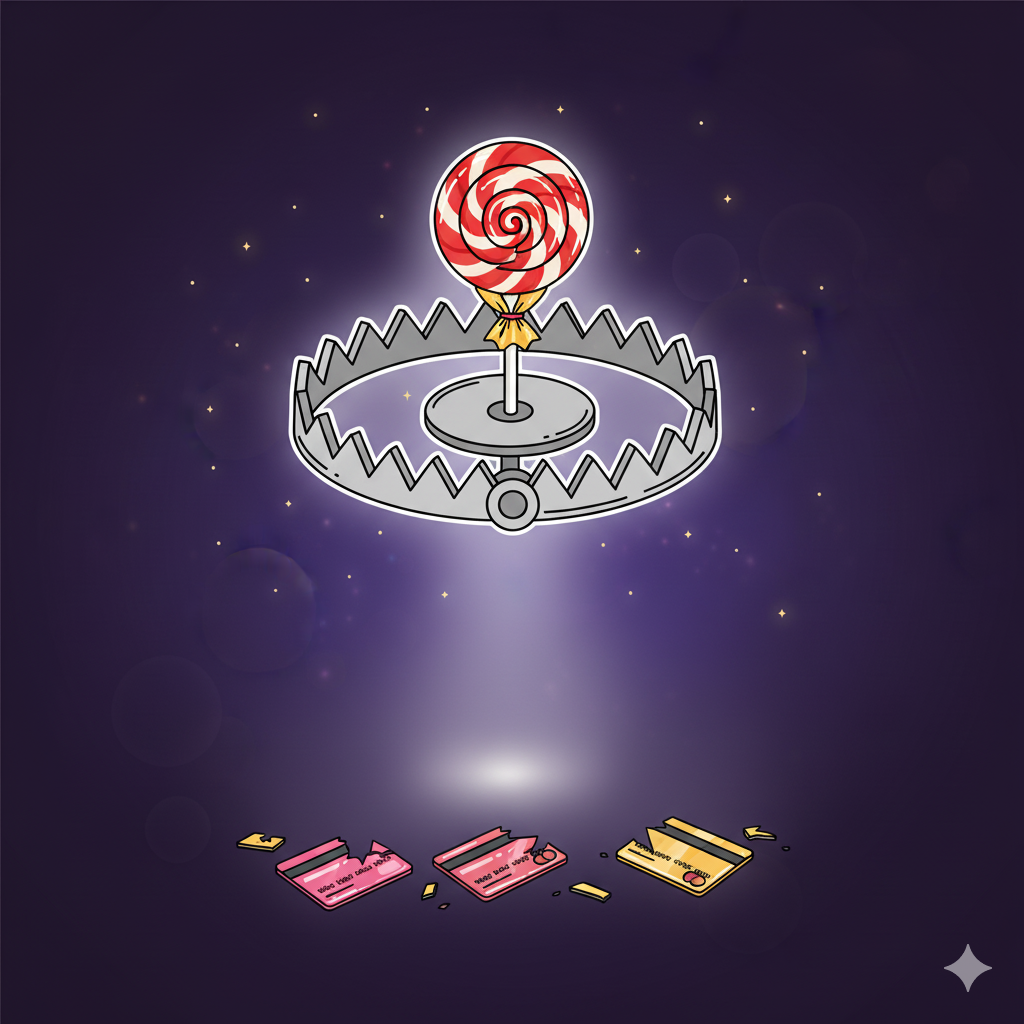
But somewhere between "take a bubble bath" and "buy this $300 face serum," capitalism hijacked the concept and turned it into a sales pitch.
Here's how it happened:
"You deserve this" became shorthand for "you should buy this."
"Treat yourself" became code for "don't think about the price."
"Self-care" became an excuse to avoid the harder question: Why do I feel like I need to buy something to feel better?
The language of empowerment got weaponized into a marketing strategy. And it's working.
Gemini_Generated_Image_cs67skcs67skcs67.png
The Emotional Economics of "Treating Yourself"
Here's what's actually happening when you "treat yourself":
You're not rewarding yourself. You're soothing yourself.
You had a stressful day, so you buy something. You feel anxious about money, so you... buy something. You're bored, lonely, overwhelmed, or understimulated, so you buy something.
The purchase isn't a treat. It's a band-aid. And band-aids don't heal wounds—they just cover them up.
The Dopamine Deception
When you click "buy now," your brain gets a hit of dopamine. It feels like relief. It feels like self-care. But it's not addressing what you actually need.
You're not treating yourself—you're distracting yourself. And the companies selling you "self-care" products know this. That's why their ads show up right when you're most vulnerable: late at night, after a bad day, during moments of stress.
They're not celebrating you. They're targeting you.
The "You Deserve It" Lie
Let's talk about the most insidious phrase in consumer culture: You deserve it.
This phrase does two things:
- It makes spending feel like justice. You worked hard, therefore you've earned the right to spend. It reframes consumption as a moral reward rather than an economic decision.
- It makes NOT spending feel like punishment. If you "deserve" to buy something and you don't, you're denying yourself. You're being harsh. You're not practicing self-care.
It's a perfect trap. Spend, and you're empowered. Don't spend, and you're depriving yourself.
But here's the truth: Deserving something and needing to buy something are completely different things.
You deserve rest. You deserve joy. You deserve to feel good. But none of those things require a purchase. The idea that they do? That's the scam.
What You Actually Need (And It's Not Shopping)
When you feel the urge to "treat yourself," pause and ask:
What am I actually feeling right now?
- Stressed? Lonely? Bored? Exhausted? Overwhelmed?
What do I actually need?
- Rest? Connection? Stimulation? Control? Validation?
Will this purchase address that need?
- Honestly? Usually not.
That $60 candle won't fix your burnout. That impulse food order won't cure your loneliness. That midnight shopping spree won't make you feel more in control of your life.
They might distract you temporarily. But the feeling that drove you to spend? It'll still be there in the morning. Along with the purchase you regret.
Real Self-Care Doesn't Have a Shopping Cart
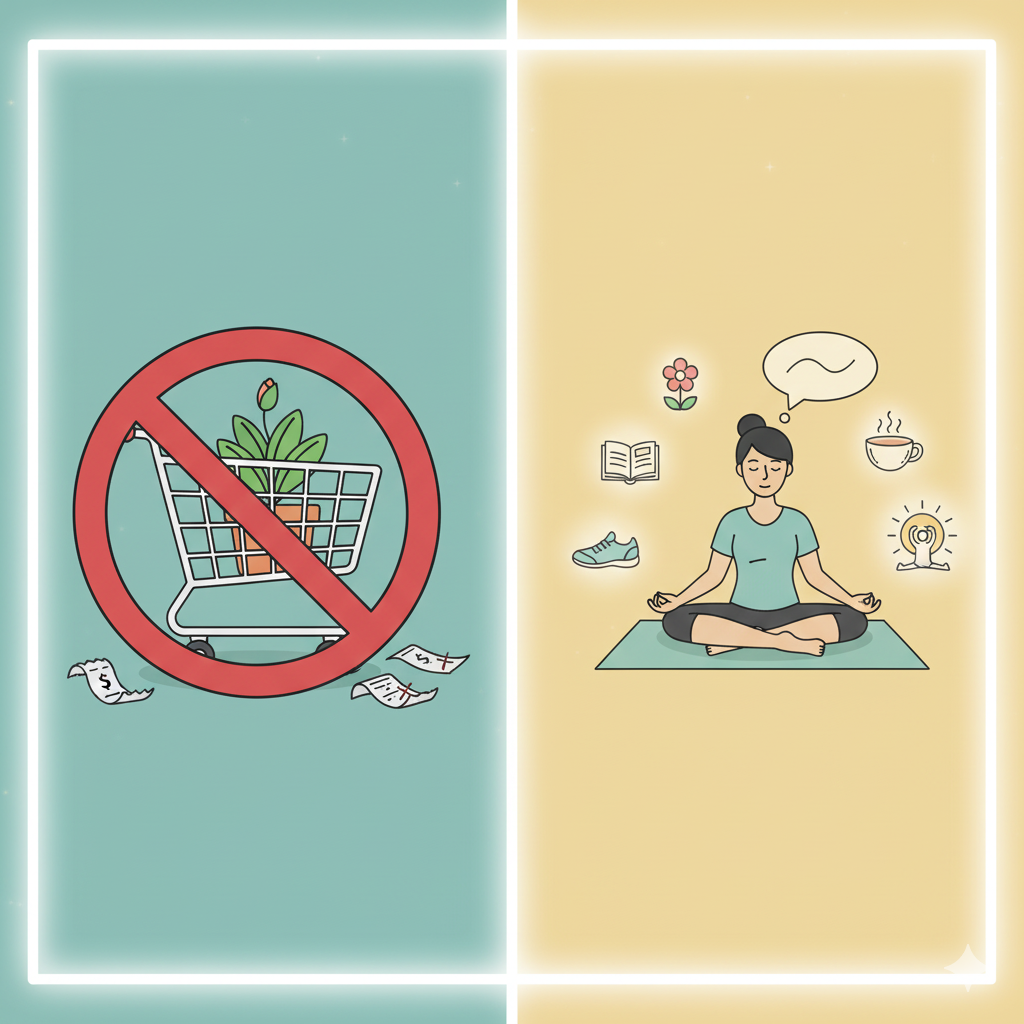
Here's what actual self-care looks like:
- Setting boundaries at work instead of buying "relaxation" products
- Having a hard conversation instead of shopping to avoid it
- Taking a walk instead of scrolling through sales
- Resting without guilt instead of "earning" rest through spending
- Addressing what's wrong instead of numbing it with novelty
None of these things are Instagrammable. None of them come in pretty packaging. None of them can be delivered in two days.
And that's exactly why they're not being sold to you.
Gemini_Generated_Image_61utd961utd961ut.png
The Difference Between Treating and Coping
Occasional indulgence is human. Celebrating wins with something special is healthy. Buying something just because you want it? That's fine.
But if you're "treating yourself" multiple times a week—if "self-care" has become synonymous with spending—if you can't feel better without buying something—that's not treating yourself.
That's coping. And expensive coping strategies don't actually solve the problem.
You Deserve Better Than This
You do deserve good things. You do deserve to feel cared for. You do deserve joy and rest and comfort.
But you don't deserve to be manipulated into thinking those things can only come from spending money. You don't deserve to feel guilty for not buying something. And you definitely don't deserve to be sold "empowerment" by companies that profit from your stress.
The real act of self-care? Learning to meet your needs without a credit card.
That's not deprivation. That's freedom.
Ready to Break the Cycle?
Impause helps you understand what's really driving the urge to spend—so you can meet your actual needs instead of just numbing them.
Download Impause and start decoding your impulses.

