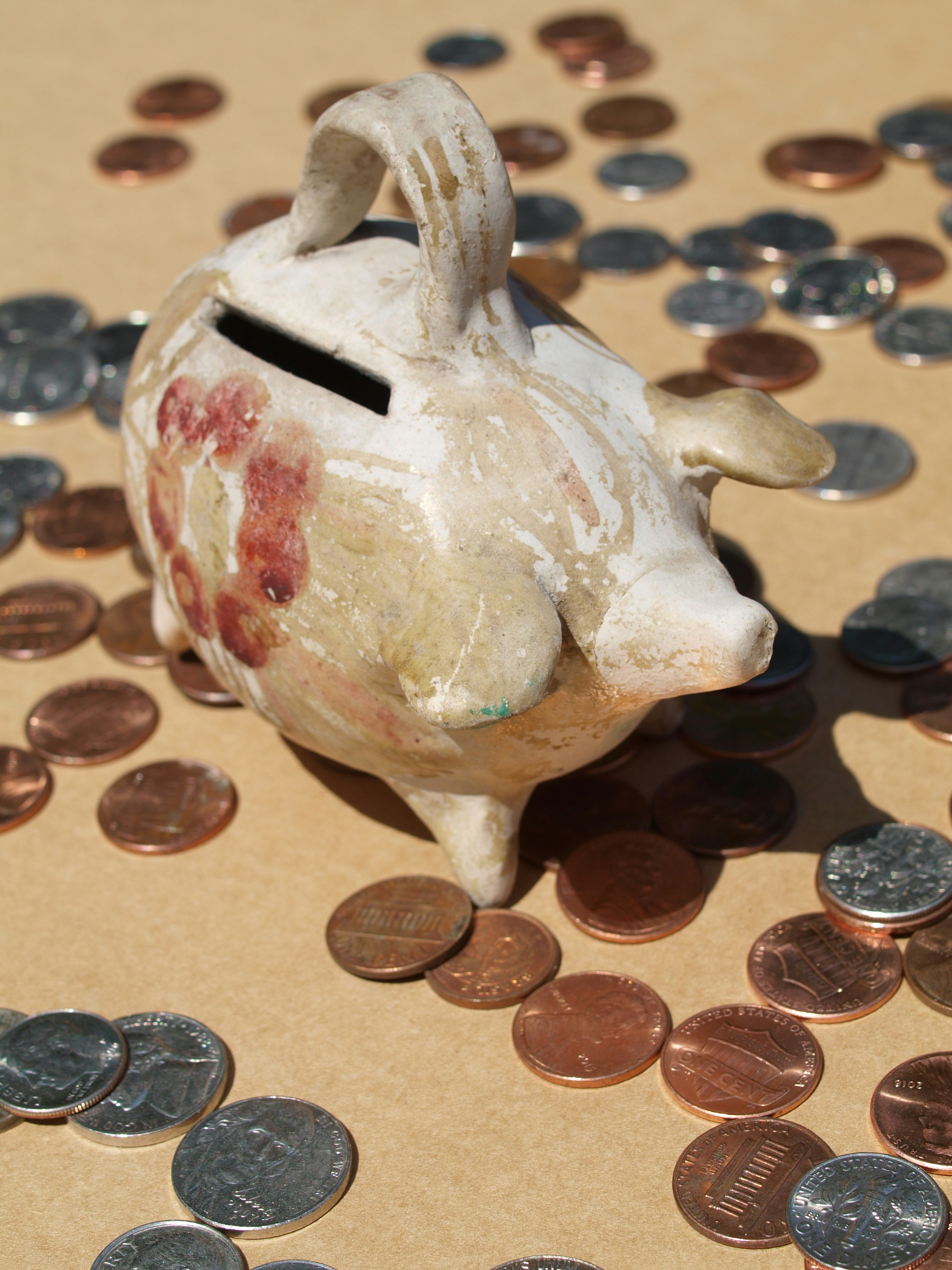
Spending visualization: what it is and why seeing your money changes how you spend
In one survey, 56% of people couldn't say how much they spent the previous month. Not within a rough range, not even close. You tap your card a dozen…
In one survey, 56% of people couldn't say how much they spent the previous month. Not within a rough range, not even close. You tap your card a dozen times a day, the number on your statement arrives like a stranger, and you think "where did it actually go?" That gap between the money you spent and the money you can picture isn't a discipline problem, and it isn't bad math. It's what happens when spending becomes invisible, and your brain was never built to track something it can't see. Spending visualization is the fix, and it's quieter and more doable than budgeting. This article breaks down what it is, the psychology of why seeing your money changes how you spend, and the small ways you can make the invisible visible again.
Table of Contents
- What is spending visualization?
- Why seeing your spending changes your brain
- How digital money makes spending invisible
- The real cost of money you can't see
- How to actually visualize your spending: 5 moves
- Why visualization beats willpower (and beats budgets)
- Ready to see your money clearly?
- Frequently asked questions
Key Takeaways
| Point | Details |
|---|---|
| Visualization makes money concrete | Spending visualization turns abstract numbers into something you can actually see and feel, which is what changes behavior. |
| Invisible money is easy to overspend | The less you physically register a purchase, the more you tend to spend, because the brain's natural brake never fires. |
| Seeing reduces the spend | Research links higher "pain of paying" and active awareness of money leaving to lower spending and less debt. |
| The format matters | A chart, a jar, an hours-of-your-life number, or cash all work because they re-attach feeling to the transaction. |
| It's noticing, not restricting | Visualization is about clarity and curiosity, not rules and limits, which is why it sticks when budgets don't. |
What is spending visualization?
Spending visualization is the practice of turning your spending into something you can actually see, instead of a number that lives in an app you never open. It can be a simple chart of where your money went this week, a running tally on a sticky note, a jar that empties as you spend, or the mental image of a purchase priced in hours of your life rather than dollars. The format varies. The point is always the same: take money, which is abstract and slippery, and give your brain a picture it can hold onto.
It helps to separate visualization from plain tracking. Plenty of people link their accounts to an app and assume the job is done. But the data quietly collecting in the background isn't what moves the needle. Research on expense tracking finds that financial self-awareness is the part that actually drives behavior change, and that the same study notes automated, background tracking is linked to lower attention than actively seeing your money. Visualization is the seeing. It's the difference between owning a scale and actually stepping on it.
| Spending visualization | Passive tracking | |
|---|---|---|
| What it does | Makes money visible and felt | Records money quietly |
| Your role | You look, you notice | The app collects |
| Emotional tone | Curiosity | Out of sight |
| Effect on behavior | Higher, because you engage | Lower, because you don't |
This is also why visualization tends to work where rigid budgets bounce off. A budget is a rule layered on top of a problem you can't yet see. Once you understand why budgeting so often doesn't work, it makes sense that the fix isn't a stricter rule, it's better vision. Seeing comes first. It's the foundation that any change gets built on, and it pairs closely with spending awareness, the broader skill of noticing what you spend and why.
"You can't manage what you can't picture. Visualization isn't the boring prep before the real work. For most people, the seeing is the work."
Why seeing your spending changes your brain
So why does a picture do what a number can't? Because your brain processes visible, concrete loss very differently from an abstract digit, and money is about as abstract as a thing can get.
Here are the five drivers that make visible spending so much easier to control than invisible spending:
- The pain of paying. Handing over money is supposed to sting a little, and that small sting is a built-in brake. Classic behavioral research found people will pay roughly twice as much when using a card instead of cash, because the card hides the loss. Visualization brings the sting back.
- Mental accounting. Your brain sorts money into invisible buckets and spends differently from each one. As the St. Louis Fed explains, mental accounting shapes our financial choices in ways that often work against us. Seeing all the buckets at once collapses the illusion that "fun money" is somehow free.
- Reward anticipation. When you spot something you want, your brain releases dopamine before you buy, not after, which is why browsing already feels good. Understanding the role of dopamine in spending helps you see that the pull is chemical, not a character flaw.
- Temporal discounting. Your brain shrinks future costs and inflates present rewards. The $40 today feels real and the statement in three weeks feels like someone else's problem. A picture of the running total drags that future cost into the present.
- Abstraction. A digit on a screen barely registers as a loss. The more concrete you make it, a chart, a jar, an hours figure, the more your brain treats it like the real resource it is.
Stat: In one study, average willingness to pay nearly doubled when people used cards instead of cash, a gap driven almost entirely by how visible the money felt.
Here's the reframe that matters: you're not bad with money because your spending feels invisible. Your brain built an efficient autopilot that happens to cost money, and it did exactly what brains are designed to do with repeated, low-friction actions. That's not a flaw in you. It's a system running as intended, and a system you can see is a system you can change.
Pro Tip: Before an unplanned purchase, say the price out loud and add "of real money." It sounds silly, but naming a cost concretely nudges your brain out of the abstract. A UCLA study on affect labeling found that putting an experience into words lowers activity in the brain's alarm center and engages the part that pauses and decides.
How digital money makes spending invisible
Your wiring is only half the story. The other half is that modern payment design is engineered to make spending as invisible as possible, because invisible spending is more spending.
Think of it as the Invisible Tap. Every layer of friction that used to make a purchase feel real has been sanded away. Cash became a card, the card became a tap, the tap became a saved card with one-click checkout, and "buy now, pay later" split the cost into four payments small enough to barely notice. Each step removes a little more of the pain of paying. The research on digital payments is blunt about it: reducing the friction and visibility of money increases impulse buying, because the natural brake never gets a chance to fire.
| Payment method | How visible the money feels |
|---|---|
| Cash | Very visible, you watch it leave |
| Card swipe or tap | Less visible, a quick gesture |
| Saved card, one-click | Barely visible, no moment of paying |
| Buy now, pay later | Almost invisible, the cost is split and deferred |
The deeper issue is that the psychology of expense tracking shows visibility is exactly what most digital tools quietly remove. Spending visualization is the counter-move. You're not trying to feel guilty about a tap, you're trying to make the tap visible enough that your brain registers it as the real exchange it is. A few ways the invisible creeps in:
- Tap-to-pay and saved cards that erase the moment of handing money over
- Buy now, pay later splitting one real cost into four forgettable ones
- Subscriptions that bill silently, so the spending never has a moment you notice
- Recommendations and one-click prompts timed for when your guard is down
The more you can name these for what they are, the less power they hold. Learning to spot your own spending triggers in the environment is part of the same skill, because half of what feels like a personal urge is a designed one.
"The most expensive feature of modern money isn't any single fee. It's that paying no longer feels like anything."
The real cost of money you can't see
Invisible spending wouldn't matter much if the only cost were a slightly emptier account. The deeper cost is what it does to how you feel about money over time.
When you can't see your spending, you can't see it adding up, so it drifts. The pleasure of each purchase fades fast, but the regret tends to stick around, and that regret feeds a loop. Feeling bad about money makes you less likely to look at it, which keeps it invisible, which makes the next unnoticed purchase easier. Low visibility protects itself. Here's what it tends to cost emotionally:
- Drift. Small, invisible purchases accumulate into a number you can't account for, and "where did it go" becomes a monthly ritual.
- Financial anxiety. Money you can't see disrupts your goals in ways you can feel but not name, which keeps a low hum of stress running in the background.
- Avoidance. Many people stop opening their banking app altogether, which feels like relief and works like a trap.
- The shame loop. Shame creates the same emotional discomfort that drives spending in the first place, so feeling bad about a purchase quietly makes the next one more likely.
This is the part most advice gets backwards. You don't break the loop with more guilt, you break it with clarity, which is the one thing guilt actively blocks. Visualization is gentle on purpose. It points a light at the spending without pointing a finger at you.
Pro Tip: Once a week, look at what you spent the way you'd read a weather report, no scoring, no scolding. The goal is information, not a verdict. Plain seeing, done without judgment, builds more useful self-knowledge than any amount of after-the-fact self-criticism.
How to actually visualize your spending: 5 moves
The good news: visualization is a skill, not a personality trait, and you can start today with almost no setup. Here are five moves, ranked from easiest to most involved.
- Picture the running total. Before a purchase, picture what you've already spent this week and add this one to it. Holding the growing number in your head, even roughly, reattaches each tap to the total it belongs to.
- Use the Denominator Move. Reprice the purchase in hours of your life. If you earn $25 an hour, a $75 impulse buy is three hours of your time. Giving your brain a denominator to measure against makes the cost concrete, because hours feel more real than an abstract price.
- Make one category visible. Pick the spending that surprises you most, takeout, clothes, gadgets, and chart just that one for two weeks. A single visible line reveals more than a full budget you'll abandon by Thursday. Tracking your spending behavior-first shows the pattern, not just the total.
- Bring back friction you can feel. Remove saved cards so you have to type the number, or pull cash for one category for a week. Both reintroduce the small, visible sting that tap-to-pay erased.
- Hold a weekly five-minute review. Once a week, look back at the actual numbers and simply notice. No fixing yet, just seeing. This is where invisible patterns become visible ones, and visible patterns are the only kind you can change.
Interestingly, research suggests this self-generated approach beats following someone else's rules. A meta-analysis found that people who created their own spending strategies reduced spending more than those handed an expert's system. Your own clarity is more powerful than any borrowed plan.
Pro Tip: Pair a number with a feeling. When you review the week, don't just note that takeout was $90, note that most of it landed on the two evenings you felt fried. Seeing the money and the mood together is where the real pattern lives, and it's the heart of working with emotional spending instead of fighting it.
Why visualization beats willpower
Most money advice treats spending as a discipline problem. Try harder. Want it less. Show more self-control. But willpower is a finite resource, and it's the first thing to go when you're tired, stressed, or depleted, which is exactly when spending spikes. Building your whole approach on willpower is like building a house on the one material that disappears under pressure.
Blaming yourself for losing that fight is like blaming yourself for being cold in a snowstorm without a coat. The payment systems and store layouts you're up against were designed by teams whose entire job is to make spending feel like nothing. You were never going to out-discipline an interface built to erase the moment of paying. But you can out-see it.
That's the quiet advantage of visualization. A budget tells you what you should have done after the money is already gone. A picture of your spending changes the moment itself, while you still have a choice. When you can see the cost as it happens, you stop fighting yourself and start working with your brain instead of against it. That shift, from self-control to self-knowledge, from punishment to curiosity, is where change that actually lasts begins.
Ready to see your money clearly?
If this helped you see your spending a little more clearly, that clarity is the whole point. Visualization isn't something you finish. It's something you practice, and it gets easier every time you look.
Impause builds free, psychology-first tools for exactly this, helping you see your spending patterns and the feelings underneath them without the guilt of traditional budgeting. A good first step is the spending personality quiz, which helps you spot your specific triggers and spending style in a few minutes. From there, you can keep exploring how Impause approaches spending differently, grounded in behavioral science and built to meet you where you are.
Frequently asked questions
What is spending visualization?
Spending visualization is the practice of turning your spending into something you can actually see and feel, like a chart, a running total, a jar, or a purchase repriced in hours of your life. It works because the brain handles concrete, visible loss very differently from an abstract number on a screen. The goal is clarity, not restriction.
Does seeing your spending actually reduce it?
Yes. Research on the "pain of paying" shows people spend significantly more when money feels invisible, like with cards or one-click checkout, and less when it feels concrete, like cash. Making spending visible reactivates the brain's natural brake, which is why visualization tends to lower spending without forcing willpower.
What is the easiest way to start visualizing my spending?
Start tiny. Pick the one category that surprises you most and track only that for two weeks, or reprice purchases in hours of your life instead of dollars. A single visible pattern reveals more than a full budget you'll likely abandon, and it asks far less of you.
Why does tap-to-pay make me spend more?
Tap-to-pay, saved cards, and buy now, pay later all remove the friction and visibility that used to make a purchase feel real. With nothing to physically register, the brain's "pain of paying" never fires, so spending climbs. Adding visible friction back, like using cash or typing your card number, helps counter it.